ENGINEERING
Rare-earth magnet recycling is learning to preserve magnetic value
A Birmingham plant and new grain-boundary research show why recovering rare-earth magnets means rebuilding magnetic performance, not simply collecting metal.
Research checked
Newest cited publication
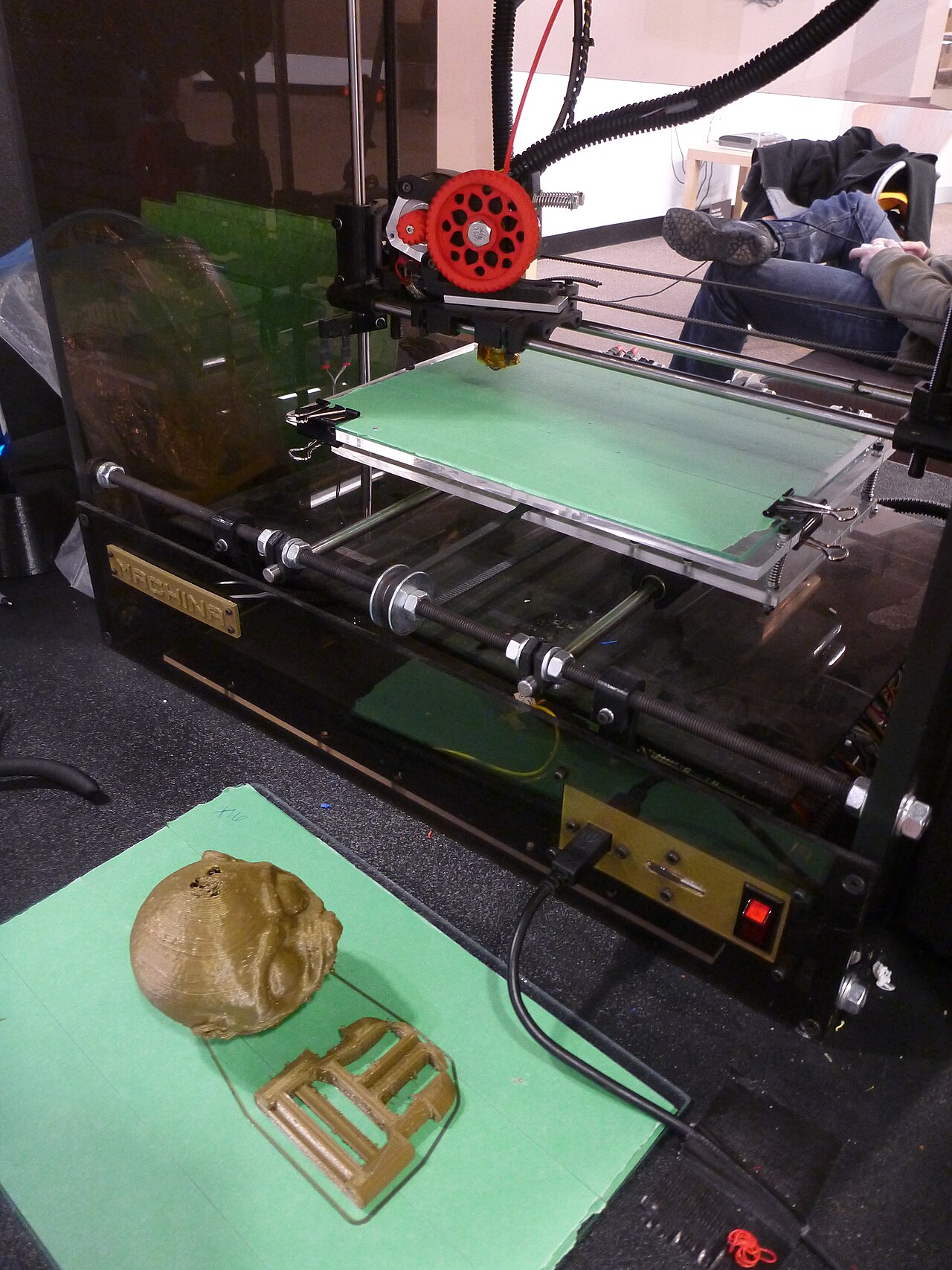
A manufacturing machine provides general process-engineering context; the magnet recycling methods discussed here operate on different materials and equipment.
Trevor Prentice / Wikimedia Commons · Image source · CC BY-SA 2.0

A discarded motor contains more than recoverable elements. Its magnets also embody careful choices about composition, grain size, alignment and heat treatment. Recycling can destroy that accumulated manufacturing work or carry some of it into another product. The distinction is becoming practical: Birmingham opened a larger magnet-recycling facility on 15 January 2026, while recent research is examining how to repair the microscopic boundaries that determine whether recycled material becomes a useful magnet again. The interesting engineering question is how much magnetic value can survive the journey, and how honestly that survival can be measured.
A new plant changes the scale of the question
The University of Birmingham reported that its Tyseley Energy Park facility can recover more than 400 kilograms of rare-earth alloy per batch. It described annual magnet-production capacity of 100 tonnes on one shift and more than 300 tonnes with multiple shifts. These are capacity figures, not evidence that those quantities had already been delivered. The university's May 2025 announcement had described a facility approaching completion; the January opening is a concrete subsequent milestone. Neither announcement, by itself, supplies a complete operating history or customer qualification record.
For an engineer assessing the development, annual capacity is only one line of the balance sheet. A useful production ledger would distinguish incoming assemblies, magnet-bearing material, purified powder, finished magnet blocks and accepted customer parts. Those quantities differ because housings and coatings are removed, some powder may need another processing route, and machining creates further scrap. Reporting all of them would make it possible to compare plants without mistaking a large intake rate for an equally large output of qualified magnets.
Hydrogen separates a valuable alloy from an awkward assembly
Hydrogen Processing of Magnet Scrap, usually shortened to HPMS, exploits the response of neodymium–iron–boron magnets to hydrogen. In the foundational 2015 study, researchers processed prepared hard-drive assemblies into demagnetized, hydrogenated powder and then separated contaminants mechanically. The process still required access preparation: intact protective coatings could obstruct hydrogen, so deforming the assemblies helped expose the magnet. This is selective dismantling through material behavior, rather than a promise that every sealed product can enter the reactor untouched.
The demagnetized intermediate is an unusually useful feature. Strongly magnetic fragments tend to attach themselves to neighboring steel and handling equipment; a powder that temporarily loses that behavior is easier to separate. Yet liberation is only the first operation. A recovered stream can contain coating fragments, adhesive residues and other debris. Calling that stream recycled magnet material before measuring its cleanliness would skip the step that decides which manufacturing routes remain available.
Preserve useful structure without pretending nothing changes
The short-loop route keeps the recovered alloy close to its eventual function. Rather than separating every constituent into individual chemical products and rebuilding the alloy from the beginning, manufacturers purify the powder and form new magnets. HyProMag's June 2025 technical bulletin describes milling, magnetic alignment, pressing and vacuum sintering, along with blending to target particular grades. It reports trial magnets containing more than 95 percent recycled material. That is a producer's technical report about selected trials, not proof that every waste stream automatically yields the same grade.
Preservation here does not mean retaining the original object's exact microstructure. Powder processing and sintering can change grain boundaries and grain sizes, while the orientation of particles must be controlled in the new component. A better analogy is retaining a carefully prepared ingredient while repeating the assembly steps that establish its final function. The shortcut is valuable only if the retained structure helps more than inherited contamination harms. That tradeoff also explains why a successful process needs both chemical analysis and magnetic measurements.
The important damage can sit between the grains
Viktoria Kozak and colleagues reported a targeted repair on 30 October 2025. They separated hydrogen-processed powder into coarse and fine fractions by jet milling and classification. Oxygen was concentrated in the rare-earth-rich fine fraction. After adding 5 percent neodymium hydride by mass and re-sintering, coarse-only material produced higher remanence and coercivity than material containing both fractions.
The engineering tradeoff is explicit: remove an altered interface and rebuild what it used to do. My reading is that maximizing retained mass can conflict with preserving useful performance; a recycling target should make that choice visible.
Two measurements answer different questions
Remanence describes the magnetic induction retained after magnetization when the applied field returns to zero under the measurement conditions. Coercivity describes resistance to reversal or demagnetization, with the particular definition needing to be stated. These are related aspects of performance, but one cannot substitute for the other. A magnet can retain a strong field and still be vulnerable to an opposing field in service. Consequently, a single headline recovery percentage is less informative than the full demagnetization curve at the temperatures relevant to the intended component.
For hard-drive material, coarse-only processing yielded coercivity of 1,182 kiloamperes per metre versus 1,028 with both fractions, and remanence of 1.28 versus 1.25 tesla. Those measurements imply increases of about 15 percent and 2.4 percent, respectively. These compare two processing routes, not recycled magnets against their originals; they do not establish performance throughout an electric motor's operating envelope.
A mass balance should follow the usable product
Consider a deliberately hypothetical batch containing 100 kilograms of magnet alloy after housings are excluded. Suppose liberation recovers 95 kilograms, purification retains 90 percent of that amount, and final fabrication yields 80 percent accepted parts. The resulting output is 68.4 kilograms before accounting for any additions: 100 multiplied by 0.95, 0.90 and 0.80. None of those assumptions is a reported Tyseley operating result. The example simply shows how respectable individual yields can combine into a substantially smaller finished output.
Additions complicate the ledger further. If boundary repair introduces new material, finished mass alone can overstate recovered content unless both streams are tracked. Conversely, a separated fraction may remain useful in another recovery process, so treating it automatically as landfill would understate material utilization. The appropriate accounting follows each output to its destination, records additions separately and states the functional specification of the final magnet. This would also allow environmental comparisons to use equivalent service, rather than comparing a kilogram of mixed powder with a kilogram of qualified product.
The next evidence should connect feedstock to service life
The next convincing result would join several records that are often presented separately. One record would describe incoming material and its variation. Another would document powder chemistry and processing conditions. A third would show the distribution of finished magnetic properties, including rejected batches. Finally, component testing would establish whether those magnets survive the thermal and magnetic demands of their intended application. This is an engineering proposal for stronger evidence, rather than a claim that the existing facility lacks any particular internal quality system.
That evidence would make recycling routes easier to choose intelligently. Clean, well-characterized material may justify a short route back into magnets, while heavily contaminated or compositionally unsuitable material may justify deeper chemical recovery. The emerging opportunity is therefore a coordinated set of processes, with retained structure treated as an asset that has to earn its place in the next product. The 2026 plant opening advances scale; the boundary-phase research explains why scale must be accompanied by microscopic control. Magnetic value is recovered when both efforts meet in a reproducible, usable component.
Sources & further reading
Primary papers, project documentation, and research releases used in this article. Publication dates below refer to the sources themselves.
- World-leading rare earth magnet recycling facility launches in West MidlandsUniversity of BirminghamPublished Checked
- Pioneering recycling of rare earth magnets provides UK-based materials sourceUniversity of BirminghamPublished Checked
- The use of hydrogen to separate and recycle neodymium–iron–boron-type magnets from electronic wasteJournal of Cleaner Production / University of Birmingham repositoryPublished Checked
- Executive summary of Recent Technical Progress by HyProMag Ltd - June 2025HyProMag LtdChecked
- Improving short-loop recycling of sintered NdFeB magnets by grain boundary phase separation following hydrogen processingSustainable Materials and Technologies / University of Birmingham repositoryPublished Checked
FOLLOW THE QUESTION
Explore engineering