ENGINEERING
Electric spacecraft propulsion runs into a power and heat problem
A 120-kilowatt lithium-thruster test in 2026 highlights the coupled challenges of spacecraft power, waste heat, erosion and long-duration qualification.
Research checked
Newest cited publication
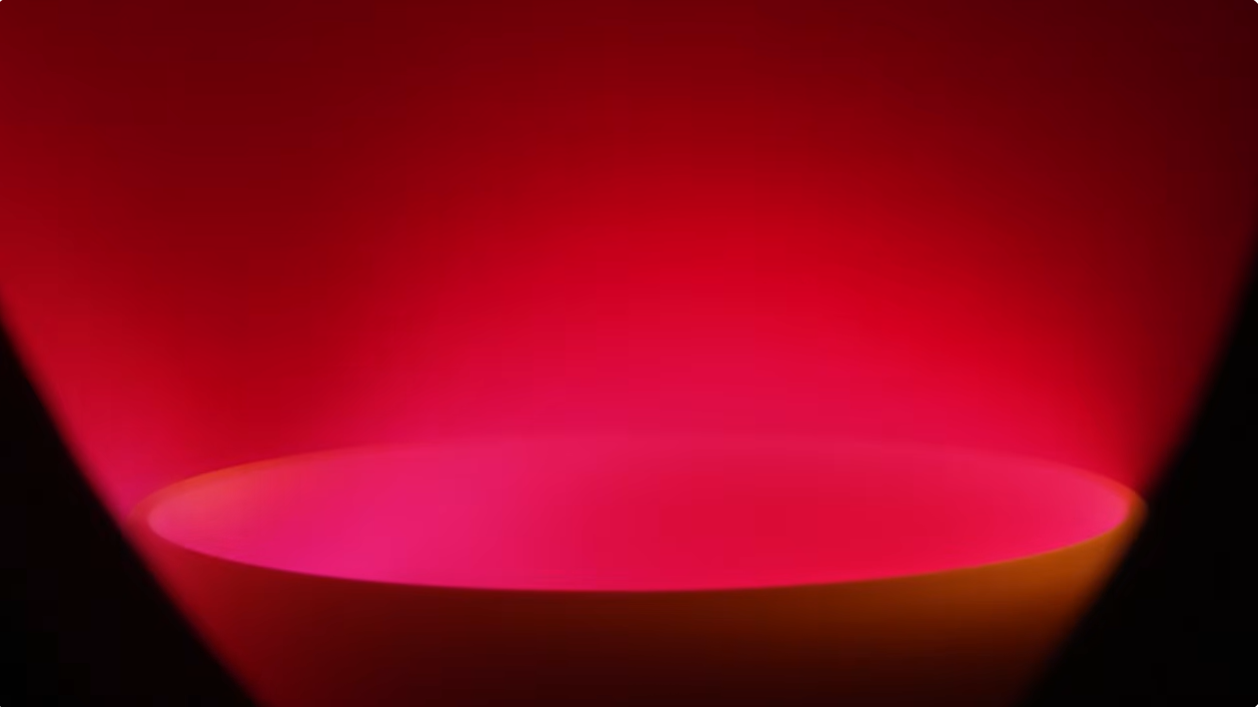
A NASA/JPL electric-propulsion prototype fires during a 2026 test, providing experimental context for the power, lifetime, and heat-management constraints examined in the article.
Courtesy NASA/JPL-Caltech · Image source · NASA/JPL media reuse policy
On February 24, 2026, a prototype lithium-fed electromagnetic thruster ran in a vacuum facility at NASA’s Jet Propulsion Laboratory. NASA’s April 28 report says it reached 120 kilowatts during the test campaign. That is an important laboratory milestone, not a spacecraft propulsion system ready to take people to Mars. At high electrical power, the thruster is only one part of an engineering problem extending through power generation, conversion, heat rejection, propellant handling and lifetime. A separate NASA update for the 2026 Space Propulsion conference described progress on a 12-kilowatt Hall thruster, including accepted flight units and environmental qualification. These results belong to different stages and technologies. Reading them together shows why scaling electric propulsion requires more than making a brighter plasma plume.
Electrical power changes the propellant trade
Electric propulsion accelerates onboard propellant using electrical energy. It does not push against empty space or obtain momentum without expelling material. In a simplified beam model, thrust equals mass flow multiplied by exhaust speed, while jet kinetic power equals one half of mass flow multiplied by exhaust speed squared. Combining those relations gives thrust equal to twice the jet power divided by exhaust speed. The real electrical input must be larger because conversion is imperfect.
That relationship exposes a fundamental trade. For an illustrative 100-kilowatt input with 60 percent becoming directed jet kinetic power and an exhaust speed of 30 kilometres per second, the simplified thrust is four newtons. This is an author calculation, not the measured thrust of the JPL prototype. Faster exhaust can save propellant for a required velocity change, but it does not create arbitrarily large thrust at fixed available power. A mission designer must choose how to balance propellant use, acceleration and flight duration.
The same illustrative calculation also shows why power and exhaust speed should not be compared independently. Doubling exhaust speed while holding useful jet power fixed halves thrust in the idealized relation. Conversely, doubling power at unchanged efficiency and exhaust speed doubles thrust, but only if the feed system, discharge and thermal design can support that operating point. A real thruster may change efficiency as it is throttled, so these proportionalities are explanations of a simplified model rather than an engine performance map. Engineers need measured maps over the usable operating range before a mission optimizer can make reliable choices among different throttle settings.
The lithium test demonstrated high-power operation, not mission endurance
JPL describes its prototype as a magnetoplasmadynamic thruster: high electric currents interact with a magnetic field to accelerate lithium plasma. The February campaign included five ignitions, and the central tungsten electrode reached temperatures above 2,800 degrees Celsius. NASA identifies component survival over long operating periods as a major remaining issue. The report discusses larger future power levels and possible nuclear-electric applications, clearly as development goals.
A successful ignition verifies a combination of feed, power and discharge behavior over the tested conditions. It does not automatically establish steady performance over years. High temperature can accelerate material loss, alter surface conditions and stress joints. A component might operate beautifully for a short demonstration while changing enough over a longer test to affect electrical or mechanical behavior. The relevant qualification evidence therefore includes duration, accumulated operating conditions and changes in the hardware, rather than peak power alone.
The unused energy still has to go somewhere
Suppose the same illustrative 100-kilowatt input converts 60 percent to directed jet power. The remaining 40 kilowatts does not simply disappear. Its destinations depend on the device: electrode heating, radiation, plume energy that does not contribute useful axial momentum, and losses in other components can all matter. The spacecraft must also reject losses from electrical conversion and, for a reactor-powered system, from generating electricity. The exact thermal burden requires a complete energy balance rather than one efficiency label.
In vacuum, external surfaces reject heat mainly by radiation. Radiated power rises strongly with temperature, approximately with the fourth power of absolute temperature for an idealized surface facing cold surroundings. Hotter radiators can reject more power per unit area, but the materials, working fluids and nearby equipment must tolerate that temperature. Increasing electrical power therefore creates a structural and thermal design problem: radiator area, deployment, plumbing, shielding and mass can become consequential parts of the propulsion system.
A lower-power thruster can be further along operationally
The NASA Technical Reports Server record for the 2026 AEPS qualification presentation states that three flight thrusters completed acceptance testing in 2025 and were delivered to NASA. It also says environmental qualification was complete, with long-duration life-demonstration preparations underway. AEPS is a 12-kilowatt Hall-effect thruster. Those statements establish a different kind of progress from a new high-power prototype firing.
Acceptance, environmental qualification and life testing ask different questions. Acceptance checks whether a particular flight unit meets its specified requirements. Environmental tests examine behavior under conditions such as vibration or temperature. Life testing investigates accumulated use and degradation. A unit can pass one category without having answered every question in the others. Scaling a mission can involve clustering more mature thrusters, developing a more powerful device, or combining both approaches. The best choice depends on required performance and how much development uncertainty the mission can accept.
The power supply changes the trajectory calculation
A March 2026 preprint by Yacob Medhin, Tushar Sial and Simone Servadio models electric propulsion and solar-array design together for an asteroid orbit-insertion scenario. It explicitly couples changing solar power, array degradation and thruster performance. The work reports simulation-based optimization, not a flight demonstration or a new operational engine. Its relevance is methodological: a trajectory computed using power that the spacecraft cannot actually supply may be physically infeasible.
As a simple solar example, irradiance at twice Earth’s distance from the Sun is approximately one quarter of its value near Earth, before accounting for orientation, degradation and temperature. A fixed array therefore cannot be treated as an unchanged power source along an arbitrary deep-space path. Nuclear power addresses a different part of that dependence but introduces its own reactor, conversion and thermal requirements. Neither supply option removes the need to optimize the spacecraft as a coupled system.
A ground test needs a trustworthy ground environment
A 2025 preprint by Emile Webster and Ben Mallett describes a new electric-propulsion thrust-test facility in New Zealand, including a stand designed to work around strong magnetic fields, cryocooler vibration and temperature gradients. It reports measurement precision and accuracy separately. The work is a facility-development report for another thruster program, not independent confirmation of NASA’s 120-kilowatt result.
That distinction highlights why measurement infrastructure deserves attention. The vacuum chamber must pump away propellant sufficiently well to approximate relevant operating conditions. Electrical leads, cooling connections and magnetic interactions can apply forces to a thrust stand. A stable instrument reading is not necessarily accurate if a systematic force remains unaccounted for. Good testing identifies those effects, calibrates the stand and reports uncertainty. As propulsion power increases, the facility must handle more energy and material while preserving the ability to make a meaningful measurement.
The useful milestone is sustained system performance
NASA’s 2026 propulsion portfolio describes Hall-thruster arrays as a likely near-term option and lithium magnetoplasmadynamic technology as a promising approach for much higher future power. That is a technology assessment, not evidence of an already assembled megawatt spacecraft. The next convincing milestones would combine measured performance with endurance, controlled propellant delivery, power-processing behavior and thermal management under representative conditions.
High-power electric propulsion remains compelling because it can change how a spacecraft spends propellant and time. Its difficulty lies in keeping a complete machine useful for the long duration over which low thrust accumulates a large velocity change. The February 2026 lithium test moves one component of that machine forward. The AEPS qualification work and the newer coupled-design studies show the rest of the story: reaching a useful mission requires a propulsion system whose power, heat, lifetime and trajectory assumptions remain consistent throughout the flight.
Sources & further reading
Primary papers, project documentation, and research releases used in this article. Publication dates below refer to the sources themselves.
- NASA Fires Up Powerful Lithium-Fed Thruster for Trips to MarsNASA Jet Propulsion LaboratoryPublished Checked
- NASA’s Electric Propulsion Development Activities for Space Nuclear Propulsion ApplicationsNASA Technical Reports ServerChecked
- Qualification Progress and Mission-Enabling Capabilities of the 12-kW Hall-Effect, Advanced Electric Propulsion System (AEPS) ThrusterNASA Technical Reports ServerChecked
- Multidisciplinary Design Optimization of a Low-Thrust Asteroid Orbit Insertion Using Electric PropulsionarXivPublished Checked
- Development of a national thrust test facility for electric propulsion at Robinson Research Institute, New ZealandarXivPublished Checked
FOLLOW THE QUESTION
Explore engineering