MATHEMATICS
Separating solitons from radiation at critical regularity
A September 2026 preprint studies critical-space soliton resolution for the Calogero–Moser equation, with spectral and solution assumptions kept explicit.
Research checked
Newest cited publication
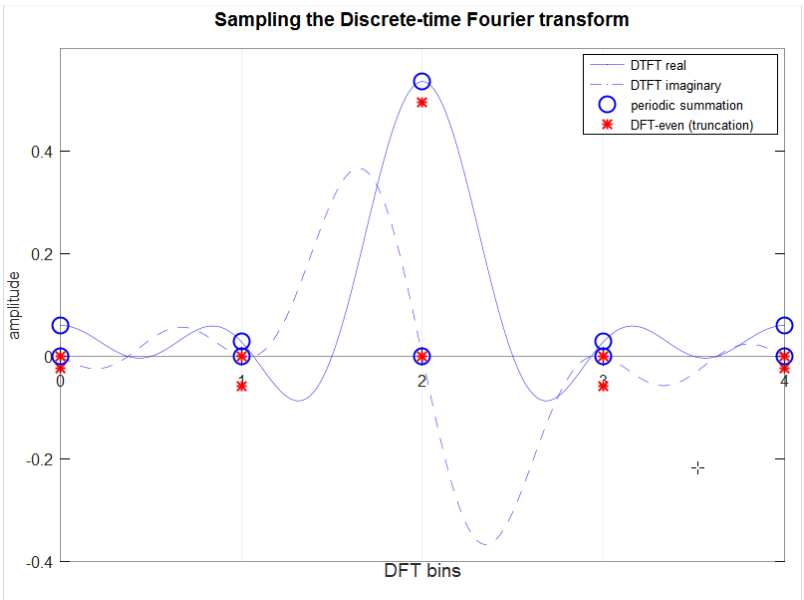
A Fourier-transform diagram introduces the frequency-based viewpoint used to study dispersive waves; it is not an image of the solitons in the new theorem.
Bob K / Wikimedia Commons. Unchanged original image. · Image source · CC0 1.0

A complicated wave can spread, concentrate or split into persistent moving structures. The soliton resolution question asks whether its late-time behavior can be decomposed into a finite collection of coherent waves plus radiation. A September 30, 2026 preprint by Shou-Fu Tian and Tao Zhang investigates this question for the Calogero–Moser derivative nonlinear Schrödinger equation at scaling-critical regularity. The precise hypotheses are essential: the paper works with an analyzable class of data and flow–Lax admissible solutions, with additional structure for its finite-time branch. It is a recent preprint, not a license to declare every nonlinear wave equation resolved.
An integrable model with a real asymptotic question
The equation evolves a complex-valued field along a line. A second spatial derivative supplies Schrödinger dispersion, while a derivative-based nonlocal nonlinear term couples the field to its intensity. The setting is chiral: the Fourier transform has support on nonnegative frequencies. This is a substantive restriction on the field, even though the field is not simply a real wave moving in one direction. The model has a Lax structure, which attaches an operator to the solution and organizes conserved spectral information.
Patrick Gérard and Enno Lenzmann’s foundational work establishes global well-posedness in an appropriate smoothness range for data at or below a mass threshold of two pi, classifies traveling solitary waves and examines energy transfer in multi-soliton solutions. It illustrates why “integrable” does not mean that every qualitative question is trivial. A formula or an infinite collection of conserved quantities can coexist with complicated movement of fine-scale structure. Soliton resolution asks for a specific asymptotic description, not merely a guarantee that some spectral quantities remain unchanged.
Why the L² threshold changes the proof
Criticality refers to how a norm behaves under the equation’s natural rescaling. For a one-dimensional field, consider replacing u(x) by λ to the minus one-half times u(x divided by λ). Squaring its magnitude gives a factor λ to the minus one, while changing the integration variable contributes λ. The two cancel, so the squared L² norm is unchanged. The Schrödinger time scale changes by λ squared. This calculation explains mass-critical scaling without requiring any particular solution formula.
A norm that remains unchanged under concentration cannot distinguish a broad packet from a compressed copy with the same mass. Higher derivatives can distinguish them, because differentiating introduces another inverse length. A spatially weighted norm can also distinguish how far the packet extends or travels. Reaching L² regularity therefore removes information that many earlier estimates used to suppress concentration or control tails. It is not a cosmetic weakening of smoothness assumptions: the proof must replace those lost controls with something supplied by the equation’s structure.
Discrete structures and continuous radiation
Rupert Frank and Larry Read’s direct-scattering paper, first posted in October 2025 and revised June 15, 2026, constructs Jost solutions and a distorted Fourier transform for the associated operator. It also derives eigenvalue trace formulas. Direct scattering extracts spectral information from a given field; inverse scattering would reconstruct the field from that information. Keeping those directions separate is important. A rigorous direct-scattering theory is a major tool, but its existence alone does not prove the full inverse problem or a complete dynamical resolution theorem.
The elementary spectral analogy is a vibrating system with trapped modes and travelling modes. A discrete mode can retain a localized shape, while a continuum of modes can move energy outward and interfere destructively in a fixed observation window. For the nonlinear equation, that separation must be translated through an operator depending on the field itself. An ordinary Fourier transform diagonalizes a constant-coefficient linear equation; a distorted transform adapts the spectral coordinates to a more complicated operator. This is a useful conceptual analogy, not an assertion that the nonlinear solution is merely a linear sum at every time.
What the newest preprint actually assumes
The September preprint treats data in the nonnegative-frequency L² space satisfying its analyzability conditions, including a spectral Dini–moment class. It requires solutions that are flow–Lax admissible, meaning that smooth flows approximate them on compact intervals before the maximal endpoint. The global branch involves a sequential rigidity condition; the finite-time branch uses an additional endpoint package specified in the paper. Under the relevant hypotheses, the authors describe solitons and radiation or concentrated bubbles and an endpoint remainder, with a precise partition of mass. These qualifications belong in any summary of the result.
An assumption about approximating rough solutions by smooth ones is not empty bookkeeping. Approximation is how an identity known for smooth functions can reach a rough limit, but the passage needs enough uniform control to preserve that identity. Weak convergence may lose mass from a local observation region, and strong convergence gives more information. Likewise, a spectral decay condition can constrain behavior that a plain norm bound cannot detect. The correct question is not whether the title says “critical space,” but which members of that space satisfy the theorem’s structural requirements.
A soliton spends a fixed amount of mass
For the standard ground-state profile R(x) equal to the square root of two divided by x plus i, its squared magnitude is two divided by one plus x squared. Integrating over the real line gives two pi, since the antiderivative is twice the arctangent. Translation, multiplication by a constant phase and the critical rescaling preserve this mass. Consequently, a decomposition into separated copies of this profile cannot contain arbitrarily many bubbles when the original total mass is fixed. This is a direct calculation illustrating the meaning of mass quantization.
Separation is essential to that accounting. The squared norm of a sum contains cross terms, so adding the masses of overlapping profiles without an argument is wrong. A resolution proof has to establish that the interaction terms vanish in the relevant limit, or track them explicitly. If the remainder carries mass as well, that contribution must be included. A plot showing two peaks is therefore weaker than an exact mass partition. The latter says that no unobserved part of the solution quietly keeps a nonzero share of the conserved quantity.
Convergence itself comes in different strengths. A peak translated farther away tends to zero in any fixed bounded observation window, even though its total squared norm stays constant. A shrinking peak can similarly disappear pointwise away from its center while retaining mass. These elementary examples explain why an asymptotic theorem names a norm and a decomposition. A local photograph or pointwise limit can miss exactly the coherent structures that a mass-based resolution must retain.
The earlier theorem supplies a different route
Taegyu Kim and Soonsik Kwon’s paper, revised January 21, 2026 and marked as forthcoming in the Journal of the European Mathematical Society, treats soliton resolution in a weighted, smoother setting. Its approach uses conservation laws, self-duality and an energy-bubbling estimate rather than depending on the equation’s integrability. The newer preprint pursues a spectral route toward rougher data with its own structural assumptions. Comparing them as complementary methods is more informative than saying that one has simply made the other obsolete.
Several distinct achievements should remain visible: identifying which solutions exist, proving they can be approximated appropriately, separating their spectral channels, showing that the discrete profiles are genuine solitons, and controlling the remainder in the stated norm. Removing one condition at a time would be a concrete next advance. Extending an argument to another equation would require recovering its structural ingredients there. The 2026 work is interesting precisely because it approaches the edge of what mass alone can control, while making clear which extra spectral information currently keeps the asymptotic description within reach.
Sources & further reading
Primary papers, project documentation, and research releases used in this article. Publication dates below refer to the sources themselves.
- Soliton resolution conjecture for the Calogero--Moser derivative nonlinear Schrödinger equation in the scaling-critical spacearXivPublished Checked
- Soliton resolution for Calogero--Moser derivative nonlinear Schrödinger equationarXivPublished Checked
- The Calogero--Moser Derivative Nonlinear Schrödinger EquationarXivPublished Checked
- Jost solutions and direct scattering for the continuum Calogero-Moser equationarXivPublished Checked
FOLLOW THE QUESTION
Explore mathematics