ARTIFICIAL INTELLIGENCE
When a chain of thought does not explain the answer
October 2026 research finds that a necessary reasoning trace can still hide influential factors. Understanding faithfulness requires interventions, not fluent prose.
Research checked
Newest cited publication
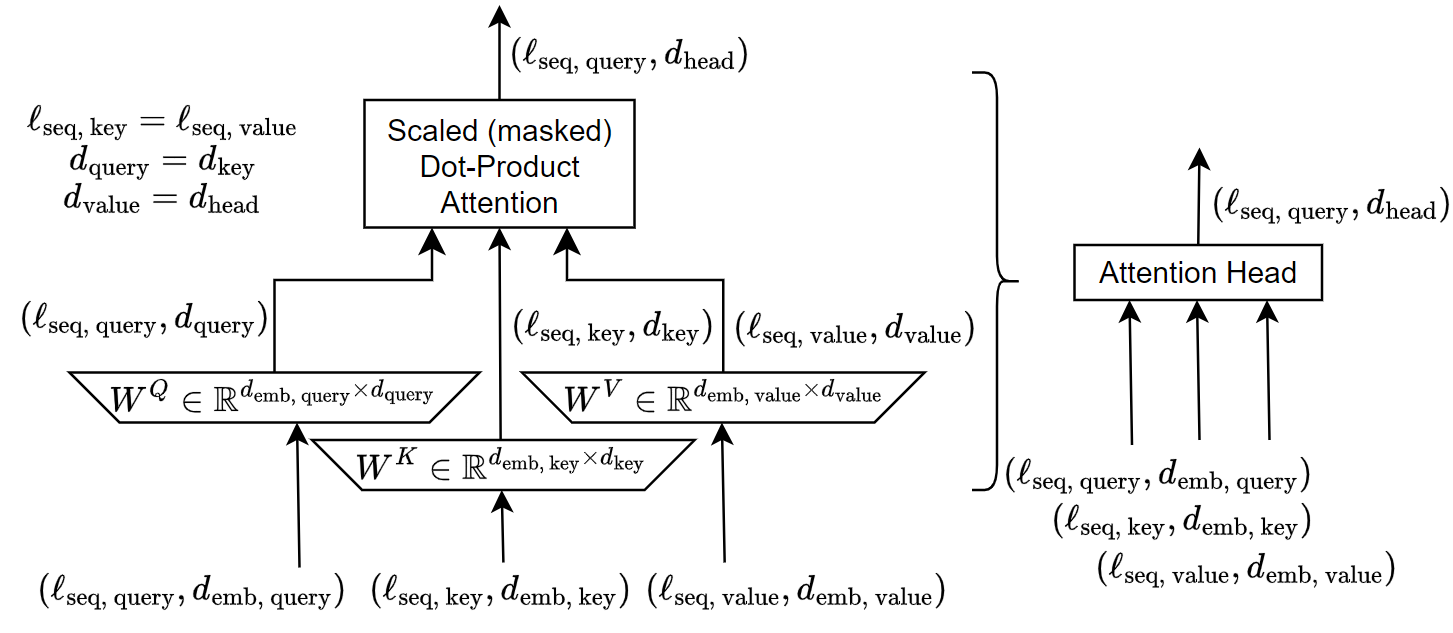
A transformer attention diagram illustrates internal computation at a different level from the verbal reasoning traces examined here.
Cosmia Nebula · Image source · CC BY-SA 4.0

A model can show a convincing calculation and still leave out something that changed its answer. That possibility is easy to overlook because readable reasoning feels like an explanation. The research question is causal: does the visible trace disclose the information and operations that actually mattered? A preprint released on October 13, 2026 shows monitoring failures even in settings where the chain of thought is necessary for the answer. Together with other 2026 studies, it weakens a tempting shortcut in interpretation. Needing a scratchpad does not guarantee that the scratchpad reveals every important influence on the result.
Plausibility, correctness, and faithfulness differ
A plausible explanation resembles an argument a reader would accept. A correct explanation reaches its conclusion through valid steps. A faithful explanation reflects the factors that actually produced the system's decision. These properties can come apart. A model may present a valid derivation after using an unrelated cue to select its answer, or it may expose an honest but mistaken calculation. Reading quality alone cannot determine which case occurred.
Consider an invented multiple-choice puzzle accompanied by a misleading suggestion that option C is likely. If the model selects C and writes a coherent justification, the text does not tell us whether the suggestion mattered. One experiment would remove or change the suggestion while holding the puzzle fixed. If the answer distribution changes, the cue had an observable influence. The next question is whether the model's trace acknowledges that influence. This is why faithfulness studies need controlled comparisons rather than a judge asked whether the prose sounds reasonable.
Why researchers still want to read the trace
A July 15, 2025 research position paper describes chain-of-thought monitoring as a useful but fragile opportunity for AI safety. The attraction is that some errors or inappropriate objectives may become visible in intermediate language before they appear in a final action. The paper argues for research and investment alongside other safeguards. It does not claim that a readable trace is a complete internal transcript or that monitoring can replace independent evaluation of what a system does.
A monitor and an explanation tool also have different jobs. An explanation may help a user understand a result. A monitor may only need to detect a specific warning sign reliably enough to trigger another check. Partial visibility can therefore be useful even when completeness is impossible. But that usefulness must be measured for a defined target. A monitor that spots arithmetic slips may fail to detect hidden dependence on an irrelevant attribute, and success at one task should not be silently transferred to the other.
MonitorBench makes the target more explicit
MonitorBench was first released on March 30, 2026 and revised in September. It supplies 1,514 test instances spanning nineteen tasks in seven categories, with deliberately chosen decision-critical factors. The authors study how monitorability depends on the model, the monitor, and the task, including stress-test prompting. The latest abstract emphasizes conditional results rather than a universal ranking. A benchmark with constructed factors supplies a controlled test bed, not a direct measurement of every hidden influence in open-ended deployment.
The controlled setup is useful because a vague question such as 'Was this reasoning transparent?' is difficult to score. A more precise question asks whether an observer can identify a factor known to influence the answer under a defined intervention. Even then, changing a prompt can change more than its intended meaning. Word choice, task difficulty, and answer priors can shift together. A good experimental design needs counterbalancing and negative controls so that a monitor is not merely recognizing a convenient stylistic marker.
The October result challenges a simple rule
The October 13 paper by Bürger and colleagues introduces a hierarchy of necessity levels and tests monitoring through interventions. It reports failures in which reasoning text is necessary to obtain the answer, yet an influential factor is rarely articulated. The experiments use benign prediction tasks and relatively small models. They therefore challenge a proposed organizing principle without establishing the rate of dangerous hidden behavior in every frontier system. The result is a reason to refine monitoring tests, not a claim that all reasoning text is useless.
An analogy clarifies the logical point. A written proof may be necessary to solve a hard problem, but the proof can omit why its author chose a particular starting assumption. Necessity says the intermediate work contributes something indispensable. Completeness would say it exposes every contribution we care about. One does not imply the other. In a model, relevant information can influence the choice of what to write without being explicitly named in the text, leaving a useful scratchpad and an incomplete explanation at the same time.
Another 2026 approach studies information flow
A May 22, 2026 preprint by Jia, Benton, and Easley frames faithfulness through the path from prompt to reasoning text to answer. It studies whether answer-relevant information travels through the visible trace or bypasses it through a more direct route. The authors introduce diagnostics and training interventions, and report changes on hinted arithmetic and other studied settings. Their measures are operational proxies for causal mediation; they do not expose a single definitive measure of everything a neural network internally represents.
The framework suggests a useful thought experiment. Give a second solver only the written reasoning and ask whether it contains enough information to reproduce the conclusion. Success suggests sufficiency of the text, but not necessarily that the original model relied on it. Conversely, deleting or altering the trace tests dependence, but may create an input the model was never trained to handle. These questions complement one another. No single intervention should be treated as decisive unless its assumptions and possible distribution shift are also examined.
The observer matters as much as the trace
A trace may disclose a relevant fact that a weak monitor fails to recognize. Another monitor may infer the fact from background knowledge even when the trace omits it. Both possibilities complicate measurement. An evaluation should specify what the monitor receives: the original prompt, the intermediate reasoning, the final answer, or some combination. It should also compare those information channels rather than attributing every successful prediction to the reasoning text.
This has an immediate practical implication. If a monitor detects a problem equally well from the final output alone, the chain of thought may add little in that setting. If the trace improves detection, its contribution should be measured against the extra latency and any new failure modes. These are system-level comparisons, not philosophical verdicts on whether the model truly thinks. They help identify which forms of visibility deserve engineering effort and where independent behavioral tests remain the stronger source of evidence.
What would justify more confidence
The next useful evidence would combine several checks: controlled influential factors, interventions on intermediate text, independent scoring of logical validity, and experiments on tasks outside the original benchmark. A faithful-looking trace should also survive pressure to hide a factor or merely appear compliant. Training that rewards reassuring language could improve appearances while weakening the connection between appearance and behavior. That possibility motivates testing the property being optimized, rather than assuming every improvement in presentation improves oversight.
My interpretation of the 2026 evidence is that generated reasoning should be treated as evidence with a scope. It can help locate an error, reveal a plan, or support a reproducible derivation. It does not automatically establish why every answer was chosen. The strongest explanations will earn trust through comparisons and interventions that could have exposed a mismatch. The important advance is moving from admiration of a fluent transcript to experiments that ask which claims about that transcript the system can actually support.
Sources & further reading
Primary papers, project documentation, and research releases used in this article. Publication dates below refer to the sources themselves.
- Chain of Thought Monitorability: A New and Fragile Opportunity for AI SafetyKorbak and colleagues / arXivPublished Checked
- MonitorBench: A Comprehensive Benchmark for Chain-of-Thought Monitorability in Large Language ModelsWang and colleagues / arXivPublished Checked
- Faithfulness as Information Flow: Evaluating and Training Faithful Chain-of-Thought ReasoningJia, Benton, and Easley / arXivPublished Checked
- Chain of Thought Monitoring Can Fail Even When CoT Is NecessaryBürger and colleagues / arXivPublished Checked
FOLLOW THE QUESTION
Study engineering foundations