ARTIFICIAL INTELLIGENCE
Knowing when a reasoning model should stop
Adaptive stopping research in 2026 distinguishes useful deliberation from repetition and harmful drift, making the decision to stop part of reasoning itself.
Research checked
Newest cited publication
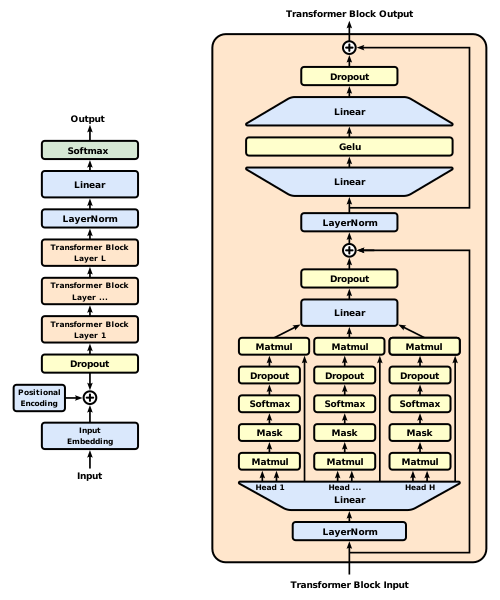
A transformer schematic provides architectural background for inference-time stopping decisions; the schematic is not a measured reasoning trace.
Marxav; vectorization by Mrmw · Image source · CC0 1.0

A model can reach a correct answer and then talk itself out of it. It can also repeat a correct answer for thousands of tokens without adding useful evidence. Both behaviors consume computation, but only one necessarily damages the final result. Research released across 2026 is making this distinction central to reasoning efficiency. Instead of assuming that a larger thinking allowance should always be used, these studies ask when further generation is likely to help. The difficult part is that the system usually does not know the correct answer in advance. A useful stopping rule must work with imperfect signals available during the attempt.
Repetition and harmful drift are different failures
The June 1, 2026 preprint Thinking Past the Answer evaluates prefixes of reasoning trajectories to distinguish redundant continuation from continuation that changes a previously correct result into an incorrect one. Its protocol uses knowledge of correctness to locate a first successful prefix. That is informative as a diagnostic upper bound: it reveals opportunities a perfect stopping policy could exploit. It is not itself a deployable rule, because an ordinary model does not receive the answer key while solving a new problem.
An invented arithmetic example makes the difference clear. A model computes seventeen times nineteen as 323, checks it by a second method, and then repeats the result. That is potentially wasteful. If it later introduces a mistaken correction and ends at 333, the continuation is harmful. A rule that merely shortens output may remove some repetition without preventing the wrong correction. The evaluation must therefore count both saved computation and transitions between correct and incorrect states, rather than treating shorter generation as a synonym for better reasoning.
The same token limit does not fit every problem
An April 12, 2026 preprint on overthinking studies changing returns as reasoning budgets increase. It reports diminishing benefits at higher budgets and observes that useful lengths vary with problem difficulty. Such evidence challenges uniform allocation in the evaluated settings. Difficulty, however, is not directly visible before a problem is solved, and tasks that look simple can conceal an unusual constraint. A controller needs an estimate that can be updated, rather than a permanent category assigned from superficial appearance.
Suppose a hypothetical workload contains many short unit conversions and a few difficult geometric proofs. Giving every query the same large allowance wastes time on easy items. Giving every query the same small allowance can destroy the difficult cases. An adaptive policy tries to move computation toward unresolved work. Its success depends on identifying that work accurately. A service should examine the distribution of errors across easy, hard, familiar, and unusual questions, because a favorable average can hide systematic premature stopping on a small but important subset.
A confident answer can still be wrong
A stopping controller might ask the model for an answer partway through generation and inspect its confidence. The problem is calibration: a model can be certain about an invalid shortcut or uncertain about a correct unfamiliar method. The June 13, 2026 Attention-State Adaptive Generation paper, abbreviated ASAG, combines confidence with signals derived from attention distributions. It probes at transitions in the reasoning process and uses those signals to guide continuation or stopping, rather than relying on confidence alone.
Attention measures how the model distributes certain internal dependencies across its context. It is not a direct meter of logical truth. A concentrated distribution can indicate stable focus or fixation on the wrong assumption. A dispersed one can indicate productive integration or confusion. The research contribution is an operational controller whose usefulness can be tested, not a general proof that attention entropy reveals understanding. For adoption, the decisive evidence is whether its decisions improve held-out task performance after accounting for the cost of obtaining and processing those signals.
Promising efficiency within a defined experiment
ASAG reports experiments across nine benchmarks and multiple DeepSeek-R1-Distill and Qwen3 checkpoints. In its Qwen3-8B comparison, the authors report an absolute average accuracy improvement of 3.2 percentage points while reducing generated tokens by nearly forty percent. The paper is marked as an ICML 2026 Spotlight. These results describe the tested configurations. Access to attention information, inference software compatibility, and the cost of probing all matter when transferring the procedure to a different serving environment.
A practical evaluation should distinguish output tokens from total work. Probing can require additional forward passes, retaining internal tensors can increase memory use, and a dynamic controller can complicate batching. On the other hand, early stopping can free capacity quickly. These tradeoffs can vary with hardware and queue load. An engineering team would therefore measure response latency and throughput alongside token counts. A token reduction remains useful evidence, but its operational value has to be confirmed in the system where the policy will actually run.
Another route learns when the rule should change
REFRAIN appeared as a preprint on October 11, 2025 and was published in the ACL 2026 proceedings. It combines a discriminator for reflective redundancy with a sliding-window upper-confidence-bound controller that adjusts stopping thresholds. The paper reports token reductions between twenty and fifty-five percent across its evaluated settings while maintaining or improving accuracy. Its adaptive component makes the stopping threshold a changing decision, although its results do not guarantee equal savings for every task or every traffic pattern.
The controller resembles a resource allocation experiment. Stopping early saves work but risks discarding a necessary correction; continuing buys another chance to resolve uncertainty but incurs cost. A policy can update its preference using observed feedback. The difficult deployment issue is deciding what feedback is available. Benchmarks supply known answers, while real users may not provide immediate correctness labels. Any transferred controller must make clear whether it needs a proxy signal, a calibration set, or delayed feedback, and how it reacts when the incoming problem distribution changes.
Stopping can be shaped before deployment
Dynamic Rollout Editing, released on June 16, 2026, approaches excessive continuation as a training-time credit-assignment problem. A successful long generation can reward both the useful prefix and the unnecessary suffix. The proposed method edits successful trajectories after an accepted prefix and changes preferences within the reinforcement-learning group. It aims to reduce the incentive for extra thinking without removing the reasoning required to reach the result. That is a different intervention from attaching a stopping controller to a frozen model.
The distinction matters when diagnosing a failure. If a model has learned that elaborate reconsideration is associated with reward, a decoding patch may be fighting a training preference. If the model already generates efficient solutions but occasionally misjudges a difficult case, a lightweight controller may be enough. These alternatives should be compared rather than combined indiscriminately. Any editing method also depends on locating a sufficient prefix correctly; otherwise, it could teach premature answers or preserve lucky guesses as if they were complete solutions.
A stopping policy should earn every early exit
An informative test would save the intermediate candidate answer whenever stopping is considered, then compare it with the outcome of continued reasoning. Four cases matter: both correct, both wrong, early right and late wrong, and early wrong and late right. These cases reveal the benefit and cost of the stopping decision. They also distinguish a policy that recognizes completed work from one that merely imposes a shorter average output. This is a proposed evaluation design built from the measurement problems above.
The emerging picture is more interesting than a contest between long and short answers. Some problems need sustained derivation, some need one targeted check, and some are already settled. My interpretation of the 2026 studies is that deciding what work remains is becoming a first-class reasoning problem. The goal should be neither maximum verbosity nor minimum length. It should be a reliable answer supported by enough computation, with a stopping policy whose mistakes are visible and whose efficiency gains survive realistic deployment constraints.
Sources & further reading
Primary papers, project documentation, and research releases used in this article. Publication dates below refer to the sources themselves.
- Thinking Past the Answer: Evaluating Harmful Overthinking in Large Reasoning ModelsCaldarella and colleagues / arXivPublished Checked
- When More Thinking Hurts: Overthinking in LLM Test-Time Compute ScalingZhou and colleagues / arXivPublished Checked
- Stop When Further Reasoning Won't Help: Attention-State Adaptive Generation in Reasoning ModelsLi and colleagues / arXivPublished Checked
- Stop When Enough: Adaptive Early-Stopping for Chain-of-Thought ReasoningSun and colleagues / arXivPublished Checked
- Stop When Enough: Adaptive Early-Stopping for Chain-of-Thought ReasoningAssociation for Computational LinguisticsChecked
- Dynamic Rollout Editing for Reducing Overthinking in RL-Trained Reasoning ModelsWei and colleagues / arXivPublished Checked
FOLLOW THE QUESTION
Study engineering foundations