ARTIFICIAL INTELLIGENCE
s1: what budget forcing changes at inference time
Budget forcing gives a reasoning model a controlled thinking window. New 2026 experiments show why longer output helps some models and unsettles others.
Research checked
Newest cited publication
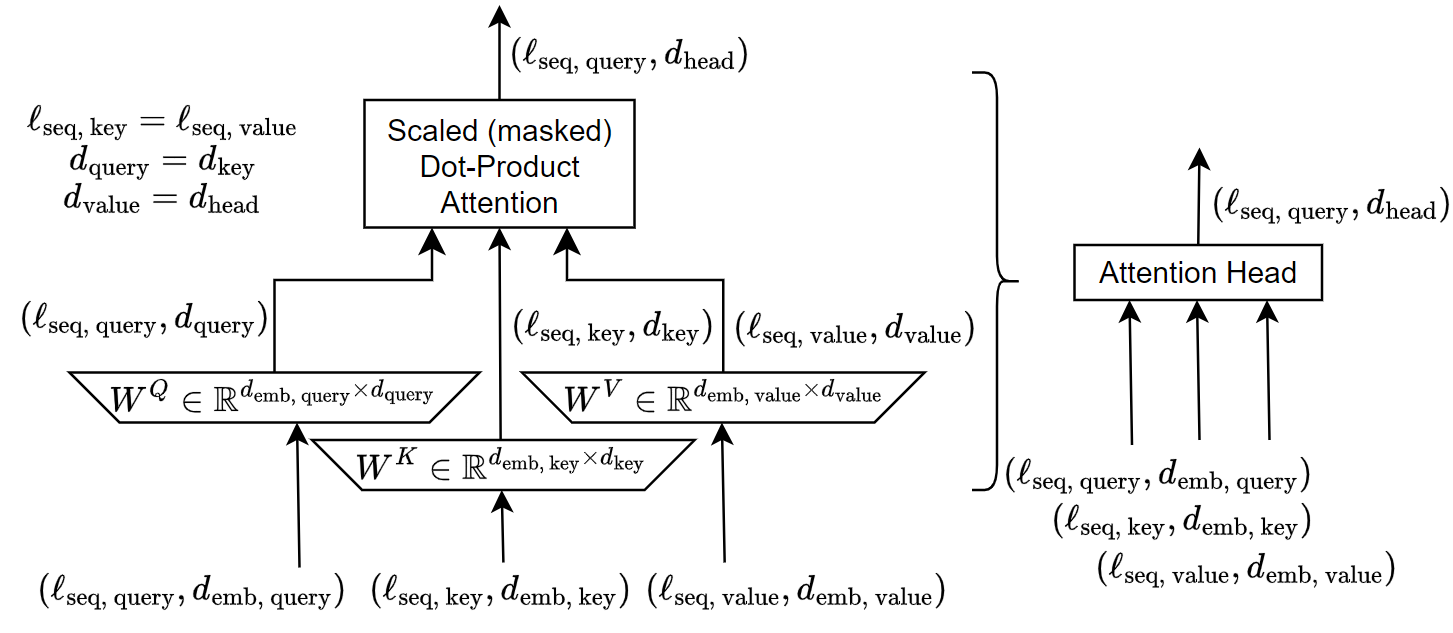
An attention-head diagram illustrates one component of the models whose inference budget can be varied; it does not visualize the s1 experiment itself.
Cosmia Nebula · Image source · CC BY-SA 4.0

What should happen when a language model tries to finish before its allotted thinking time is over? The s1 project answered with an unusually direct intervention: interrupt the ending and ask for continuation. The original preprint appeared on January 31, 2025, and made budget forcing a reproducible way to study inference-time computation. By 2026, follow-up experiments were testing its boundaries across model families. The useful question is no longer whether extra tokens can ever help. It is when a particular continuation policy buys new reasoning rather than extra text, and how an experiment can tell the difference.
Two budgets that should not be confused
Training changes a model's parameters. Inference uses those parameters to produce an answer. Budget forcing acts during inference, but s1 also includes a training intervention: supervised fine-tuning on a selected set of one thousand reasoning examples. Those examples were chosen with attention to quality, difficulty, and diversity. Consequently, the reported system is a combination of a trained checkpoint and a decoding procedure. Applying the procedure to an arbitrary checkpoint is a new experiment, not an automatic reproduction of the original result.
A useful comparison is a calculator with a revised operating procedure. Giving an existing system more opportunities to inspect intermediate work differs from installing new mathematical knowledge. Both can improve the result, and both can interact. If a model has learned to use a scratchpad productively, a longer scratchpad may help. If it has learned a short answer pattern, prolonging the pattern may simply generate alternatives without a reliable way to choose between them. The initial training therefore belongs in any account of inference-time performance.
The intervention sits at the boundary of thinking
The s1 procedure can impose an upper limit by ending the thinking stage and eliciting an answer. It can also impose a lower limit by suppressing the normal end and inserting a continuation cue such as 'Wait'. The model then generates more text from that modified context. The public implementation makes this intervention inspectable. It is a controller around generation, not a change to the mathematical rules governing the task or a guarantee that the next tokens will improve the solution.
The distinction becomes clear in an invented algebra example. A model solving x squared equals nine might initially return only three. Additional continuation could prompt it to inspect the negative root and correct the omission. On another question, the same cue could encourage it to abandon an already valid derivation. The controller can require more computation, but it cannot specify what that computation will discover. Measuring the number of tokens is easy; measuring whether they add a missing constraint requires task-specific evaluation.
What the original benchmark result establishes
The original s1 work reports that its controlled continuation raised AIME 2024 performance from about fifty to fifty-seven percent in the compared setting. That is evidence of useful scaling for a particular model, benchmark, and protocol. It should not be read as a universal return for adding a fixed number of tokens. Competition mathematics has short, checkable final answers and relatively small test sets, so results can be sensitive to the precise sampling and grading procedure.
To see the statistical issue, consider a hypothetical thirty-question exam. One additional correct answer changes its score by approximately 3.33 percentage points. Repeating the evaluation with different random seeds can change which questions cross the success boundary. This arithmetic does not invalidate an improvement; it tells us why individual question outcomes and uncertainty matter. A robust report would preserve the prompts, the forced boundaries, the randomization settings, and the final extracted answers, allowing another group to inspect whether the gain survives reasonable changes in implementation.
The 2026 follow-up finds model dependence
An original experimental article in ICLR Blogposts 2026 revisits budget forcing across several reasoning and instruction models. It reports that some supervised reasoning models benefit, while other checkpoints show little benefit or a decline. It also tests continuation words beyond the original cue. Its central contribution is a counterexample to a blanket rule: performance does not rise smoothly with every increase in the thinking budget across all tested systems.
That result invites a mechanism question rather than a new slogan. A continuation token changes the textual context and therefore changes the distribution of subsequent tokens. It can signal reconsideration, an alternative derivation, or merely a familiar rhetorical transition. Different training histories can attach different behaviors to the same cue. My reading is that a budget controller should be calibrated for a checkpoint and workload. A word that succeeds on one mathematical model should be treated as a candidate intervention elsewhere, with its value established by fresh measurements.
A longer attempt is not the same as more attempts
An August 2026 preprint by Hariri and colleagues separates single-trajectory continuation, aggregation of completed candidates, and search over partial candidates. These procedures expose different opportunities for correction and incur different costs. Their framing treats the complete inference system as the evaluated object. That matters for budget forcing because its gains should be compared against realistic alternatives using matched accounting, rather than against a baseline that has fewer opportunities to recover.
Suppose an illustrative service can afford twelve thousand output tokens. It could generate one long attempt, four shorter attempts followed by voting, or several candidates followed by verification. These choices have different latency and dependence patterns. The long attempt can revisit earlier work, but it remains conditioned on its own previous mistakes. Separate attempts may diversify errors, but a vote can repeat a common misconception. A useful experiment asks which allocation produces the most verified answers within the actual resource constraint, including the controller and any selection work.
A user waits for the whole system
Sequential continuation has a particular operational cost: later tokens depend on the earlier ones. Separate candidate generations may be processed concurrently, while one increasingly long attempt cannot be divided into independent reasoning fragments without changing the procedure. This does not make parallel sampling automatically faster on every machine. Batch capacity, memory pressure, context processing, and verification overhead all affect elapsed time. It means that a token budget is an incomplete description of the experience delivered by a reasoning service.
A useful deployment experiment would record both time to a usable answer and the quality of that answer under a fixed deadline. It might allow a short attempt to finish, then spend remaining time on a targeted check only when the result remains uncertain. That policy is an illustrative design, not an established finding of s1. It follows from taking budget forcing seriously as one control option among several. The controller should serve the task's needs, including responsiveness, rather than make a long generation the default definition of effort.
How to test a budget policy without fooling yourself
Start by choosing the task distribution before adjusting the controller. Keep an untouched evaluation split, report the unforced baseline, and test both forced continuation and forced stopping. In an experimental design, these are different treatments: a maximum budget can truncate necessary work, while a minimum budget can add unwanted work. Separate their effects. Also record failed generations and extraction errors, because silently dropping malformed outputs can make a controller look more capable than it is.
An informative plot would show correctness, generated tokens, elapsed time, and their uncertainty across several budgets. It would include question-level transitions: wrong to right, right to wrong, and unchanged. Those transitions help distinguish correction from instability. This is an evaluation proposal, rather than a claim that the published papers have already standardized every such measurement. Budget forcing remains appealing because it makes a hidden operational choice visible. The next step is to decide when to continue using evidence from the evolving solution, instead of treating every remaining token allowance as an obligation to spend.
Sources & further reading
Primary papers, project documentation, and research releases used in this article. Publication dates below refer to the sources themselves.
- s1: Simple test-time scalingMuennighoff and colleagues / arXivPublished Checked
- s1: Simple test-time scalingsimplescalingChecked
- Wait, Do We Need to Wait? Revisiting Budget Forcing for Sequential Test-Time ScalingICLR Blogposts 2026Checked
- Test-Time Scaling in Reasoning LLMs: Inference Regimes, Evaluation, and ReproducibilityHariri and colleagues / arXivPublished Checked
FOLLOW THE QUESTION
Study engineering foundations