ENGINEERING
Iron-air storage and the engineering of a hundred-hour battery
New iron-air project agreements in 2026 sharpen a practical question: how should a grid value batteries designed for rare, multi-day shortages?
Research checked
Newest cited publication
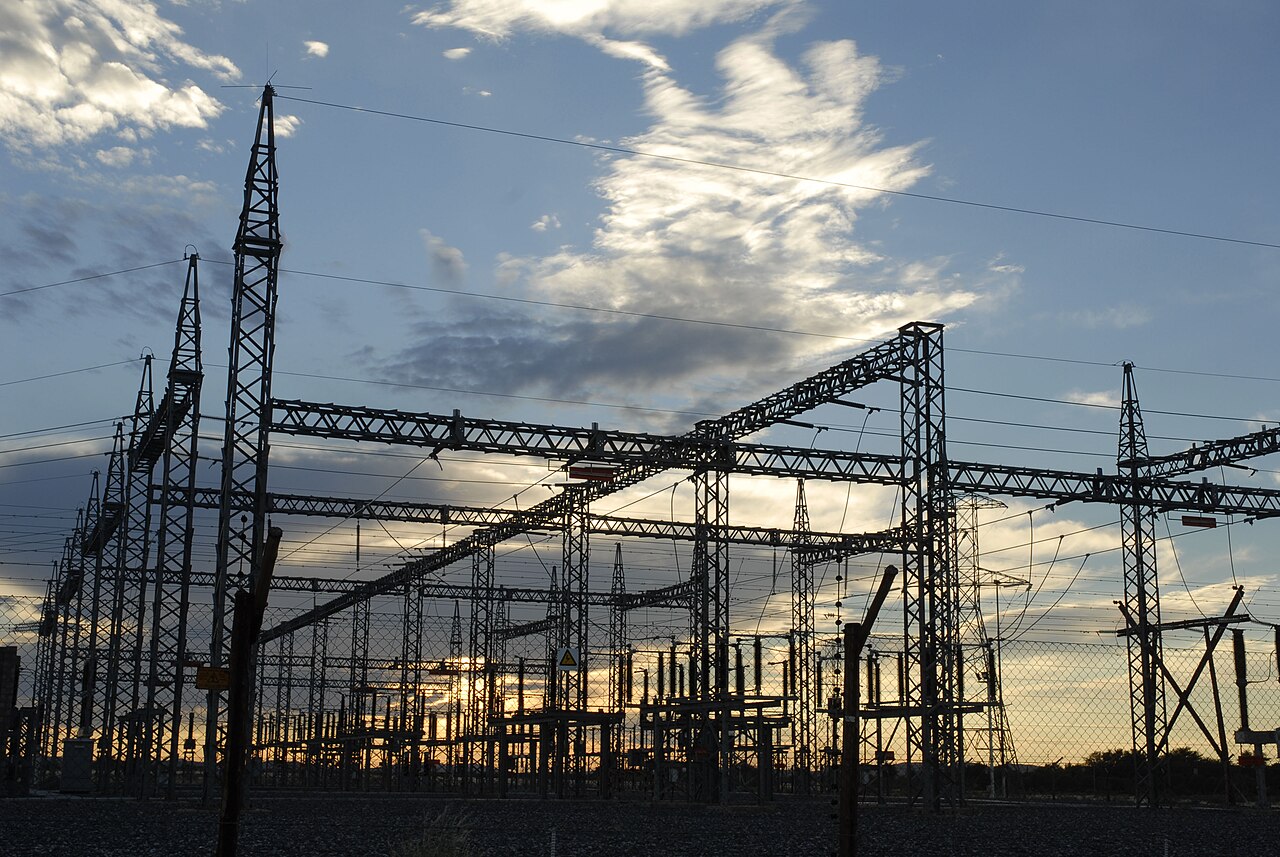
A high-voltage substation illustrates the electrical infrastructure long-duration storage must serve. The photograph does not show an iron-air storage installation.
Graeme Williams / Media Club · Image source · CC BY-SA 2.0

A hundred-hour battery belongs to a different engineering conversation from a battery that moves midday solar production into the evening. It is built around the possibility that a power system may need substantial energy through several difficult days. During 2026, Form Energy announced agreements for projects in Ireland and with data-centre developer Crusoe, followed by new financing for manufacturing. These announcements show an expanding pipeline, but a pipeline is not an operating fleet. Understanding the technology requires separating its electrochemical promise, its factory ramp and the evidence utilities will need before assigning dependable capacity to a new storage resource.
What the 2026 agreements actually say
On March 17, 2026, Form Energy and FuturEnergy Ireland announced a planned 10-megawatt, 1,000-megawatt-hour iron-air installation in northwest Ireland, anticipated online in 2029. The ratio is explicit: 1,000 megawatt-hours divided by 10 megawatts equals 100 hours at that rated output. One week later, Form and Crusoe announced an agreement involving 12 gigawatt-hours of batteries for data centres. Both reports describe commercial plans, not a published operating history of those future installations.
In August 2026, Form reported financing intended to support manufacturing scale-up and commercial deployments. Financial backing can help buy equipment, hire staff and survive a long development cycle. It cannot substitute for accepted batteries operating at customer sites. My reading is that the central development is now industrial coordination: customers, factories, utilities and construction teams must progress together. A large order book matters, but its engineering significance depends on when useful, commissioned capacity emerges from it.
A controlled rust cycle is still an electrochemical machine
Form describes its battery as using iron, water and air. During discharge, iron is oxidised; electrical charging reverses the process. The appealing shorthand is reversible rusting. However, a useful battery has to control where reactions occur, move ions through its electrolyte and sustain access to oxygen. The simplicity of the principal materials does not mean that all the internal components, interfaces and operating procedures are simple or already interchangeable with commodity infrastructure.
An everyday rusting object loses its usefulness because nobody controls the reaction geometry or reverses it. A rechargeable electrode has a more demanding job: it must preserve conductive pathways and access to reacting material over repeated changes. Air handling adds another boundary to manage. Even without knowing a proprietary cell recipe, it is clear why developers need coordinated electrochemistry, mechanical design, fluid management and controls. The product is an engineered reaction environment, rather than a container of iron that naturally behaves like a grid asset.
Why a hundred hours changes the optimisation
Energy capacity and power rating answer different questions. Power says how quickly electricity can be delivered. Energy says how much can be delivered before recharge is necessary. A hypothetical 10-megawatt system with only 40 megawatt-hours would provide four rated hours, while the announced Irish configuration pairs the same power with twenty-five times as much energy. This arithmetic does not establish how many hours a real system will run under every condition; losses, reserves and operating limits still matter.
The distinction helps explain why different storage technologies can coexist. A resource intended for brief, frequent dispatch is strongly rewarded for efficient cycling and rapid response. A resource intended to bridge an infrequent prolonged shortage may justify a different balance of energy-capacity cost, land use and efficiency. The correct comparison is the cost of providing the required service across an actual year, including the difficult weather sequence, rather than the cheapest battery nameplate on a spreadsheet.
Losses matter, but dispatch frequency matters too
A storage device cannot return more electrical energy than it receives without another energy source. If an illustrative system has 60 percent round-trip efficiency, delivering 100 megawatt-hours requires roughly 167 megawatt-hours of charging energy. This is a hypothetical calculation, not a measured efficiency for Form’s product. It makes the accounting visible: lower efficiency increases the energy that generation and interconnection must supply, and the resulting loss must fit the economic and environmental case.
How often that loss is incurred matters. A battery cycling daily and one held for rare shortages can have very different annual charging requirements even if their discharge capacities match. Yet infrequent use creates a separate financing challenge: expensive equipment must earn its keep despite limited energy sales. Engineers therefore need chronological system studies that include charging opportunities, reserve requirements, outages and the value of avoiding shortages. Neither efficiency alone nor an attractive material price resolves that combined problem.
A utility planning document provides a useful reality check
Great River Energy’s 2026 integrated resource plan offers a more bounded view of deployment. It says balance-of-plant construction at its Cambridge site was substantially complete, while the utility awaited remaining modules and anticipated commercial operation by the end of 2026. It also describes plans to operate and test the technology across seasonal conditions and update modelling inputs using verified results. At the October research cutoff, that document supports an anticipated commissioning schedule rather than proof of completed year-end operation.
That distinction is especially valuable because a first installation teaches things that a factory acceptance test cannot. Weather, control interfaces, inspection access and maintenance routines all interact at a site. Utilities need to learn how an asset behaves when called upon after waiting, how faults are isolated and how much usable capacity remains over time. Building those observations into subsequent planning is a sound response to uncertainty. Assigning a new technology mature-fleet assumptions before collecting the evidence would conceal it.
A long-duration product creates a manufacturing challenge
The August financing announcement states that proceeds are intended to accelerate manufacturing in Weirton, West Virginia, and advance deployments. The manufacturing question is not just whether a factory can assemble many modules. It must establish quality checks that identify defects before installation, maintain consistent inputs and deliver equipment in the sequence construction projects need. A delayed batch can affect site energisation even when much of the civil and electrical work has already been finished.
Duration also changes how progress should be reported. Gigawatt-hours of product capacity sound enormous, but they need their corresponding power rating and intended duty attached. A hundred-hour system naturally accumulates a large energy number relative to its megawatts. That is its design purpose, not a reason to compare its energy figure directly with the generating power of a plant. Tracking delivered modules, commissioned megawatts, usable megawatt-hours and demonstrated discharge duration together makes manufacturing progress intelligible.
The evidence that would settle the next argument
The most useful next publication would show a complete commissioned system over disclosed charge and discharge sequences, with auxiliary consumption included. Availability should count periods when maintenance or faults prevent the promised output. Ageing data should state both calendar time and cycling history. For a multi-day resource, a carefully measured long discharge after a realistic idle interval could be more informative than a large number of short, convenient laboratory cycles. Clear operating boundaries make those measurements reusable.
Iron-air storage is interesting because it challenges the assumption that every battery must excel at the same task. The 2026 agreements widen its opportunity, while the utility commissioning plan illustrates the distance between opportunity and proven service. The engineering test is specific: can an affordable, maintainable system provide useful power through the stress events for which it is purchased? Factories and projects are now being organised around that question. Their operating records will determine how confidently future grids can answer yes.
Sources & further reading
Primary papers, project documentation, and research releases used in this article. Publication dates below refer to the sources themselves.
- Battery TechnologyForm EnergyChecked
- Form Energy and FuturEnergy Ireland Announce Agreement To Deploy First Iron-Air Battery Storage Project In IrelandForm EnergyPublished Checked
- Form Energy & Crusoe Announce Agreement for 12 Gigawatt-Hours of Iron-Air Batteries for AI Data CentersForm EnergyPublished Checked
- Form Energy Secures $750M in Series G Financing to Scale Iron-Air Battery Manufacturing and Accelerate Commercial DeploymentsForm EnergyPublished Checked
- 2026–2040 Integrated Resource PlanGreat River EnergyChecked
FOLLOW THE QUESTION
Explore engineering