ARTIFICIAL INTELLIGENCE
Wan3.0 and the engineering of controllable video
Wan3.0 and September 2026 prompt-planning research show why longer generated videos need explicit timing, faithful references, and reproducible evaluation.
Research checked
Newest cited publication
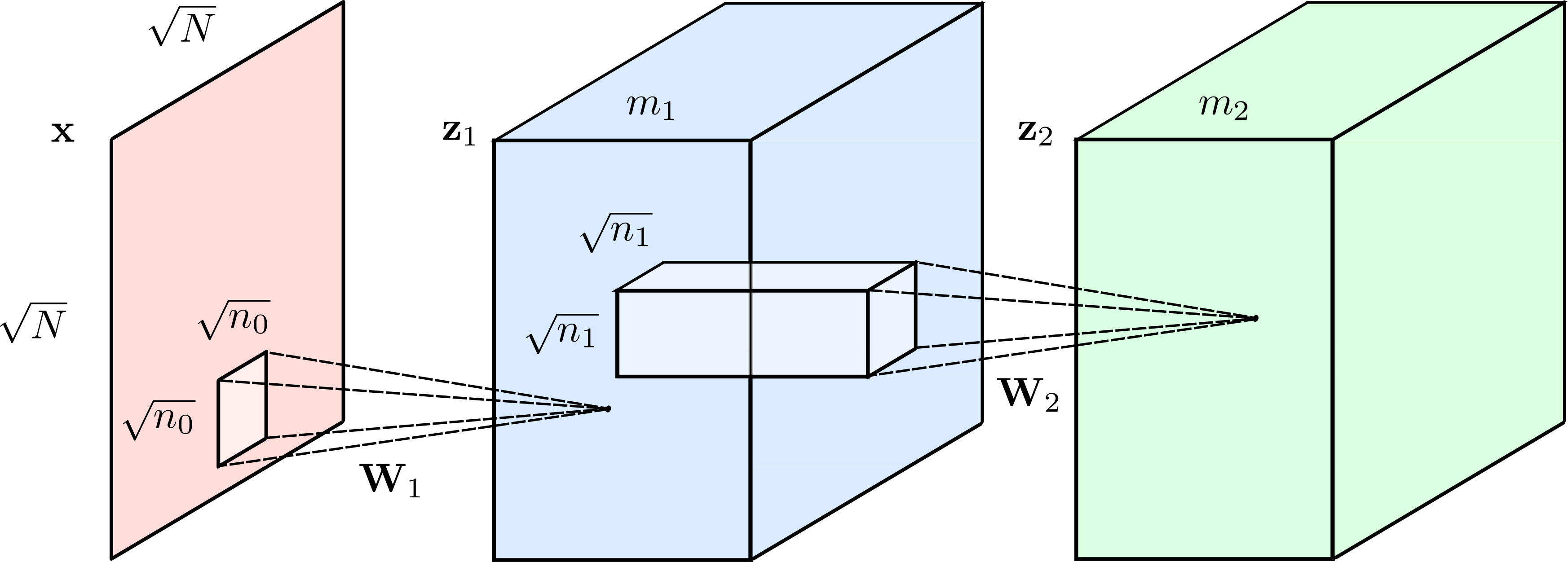
A visual-network diagram provides background for learned image features; the video-generation architecture and temporal components are described in the article.
Renanar2 · Image source · CC BY-SA 4.0

A thirty-second generated film has time to reveal a contradiction. A person can change clothes between shots, a hand can release an object that never lands, or a product label can quietly mutate. Alibaba's August 2026 Wan3.0 announcement and the September 24 WanPE preprint make a useful pair: the first expands the available creative canvas, while the second investigates the instructions that organize it. The research question is moving beyond whether a model can make an attractive clip toward whether it can preserve a director's decisions as time passes.
A new service and an older open research foundation
Alibaba announced Wan3.0 in public beta on August 7, 2026. Its release described native clips up to thirty seconds and reference inputs spanning text, pictures, video, audio, documents, and web pages. These are vendor-described capabilities, rather than independent evidence that every combination works equally well. The official product documentation additionally specifies thirty-frame-per-second MP4 output and distinguishes reference generation, first-frame control, editing, and extension modes.
This service should not be confused with the openly released Wan2.2 research checkpoints from July 2025. That repository exposes a concrete architecture, inference code, and model files. A newer product name does not establish that its weights or complete training recipe are downloadable. For someone investigating controllability, both surfaces matter: a hosted system reveals what creators can request today, while an inspectable predecessor allows controlled experiments on the machinery underneath.
Why video needs a smaller internal canvas
The March 2025 Wan technical report describes a diffusion-transformer system with a learned video autoencoder. Such an autoencoder compresses visible frames into a latent representation before the expensive generative work occurs. Wan2.2 also documents specialists operating at different denoising stages. These statements describe the published open lineage; they should not be silently promoted into an architectural specification for Wan3.0, whose product interface alone cannot reveal every internal component.
An independent storage calculation illustrates the pressure. An uncompressed RGB sequence with 1,280 by 720 pixels, twenty-four frames per second, and five seconds of footage contains 331,776,000 color-channel values. Doubling duration doubles that raw count before intermediate neural activations enter the picture. Compression is therefore a practical condition for experimentation. It also creates an information bottleneck: tiny writing or fast finger motion can occupy little latent capacity while carrying enormous meaning for a viewer.
Prompt enhancement becomes an actual research problem
WanPE, submitted September 24, 2026, treats prompt preparation as cinematic planning. Its authors train using plans reconstructed from real videos rather than relying only on a language model to embellish short requests. They also apply a reinforcement-learning objective aimed at keeping the requested subjects, relationships, and event order intact. The paper reports a 397-billion-parameter variant and evaluates generated outputs through blind human comparisons.
Consider an original hypothetical brief: a cyclist places a blue helmet on a bench, then walks toward a train. Adding beautiful sunset lighting is harmless only if the helmet stays blue, the bench remains where it was, and walking follows placement. A planner must distinguish optional styling from binding requirements. Otherwise, a longer prompt becomes another opportunity to substitute the model's preferred scene for the user's intended one. This distinction is useful even without access to WanPE: write down the nonnegotiable events before asking for artistic expansion.
More input modalities create more ways to disagree
The Wan3.0 guide describes different combinations of input materials, and warns that task modes do not accept every possible mixture of media types. A first-and-last-frame request, for example, is a different constraint problem from freely combining references. Application code must follow the specific combination rules instead of assuming that support for a modality means support for that modality everywhere.
The conceptual difficulty goes deeper than request validation. Suppose a reference photograph shows a yellow bicycle while a written brief requests a red one. There is no uniquely correct compromise without an explicit priority rule. A useful production interface would ask which reference controls identity, which controls composition, and which may be changed. That is an editorial inference, not a claim about an undocumented Wan feature. It explains why a rich upload panel can still produce an unpredictable experience: more conditioning information only helps when conflicts are resolved coherently.
Judge the whole event, including its ordinary middle
WanPE's reported human-preference improvements concern the authors' evaluation setting. A preference win means that judges favored one result under those conditions; it does not certify faithful object permanence, accurate diagrams, or physically valid motion in every frame. The study is a preprint as of this article's cutoff. Its comparisons are evidence for the proposed planning method, not a permanent ranking of all video systems.
A useful independent test would define observable events before generating anything. In the cyclist example, evaluators could mark helmet identity, placement time, the cyclist's path, and whether the camera ever cuts away from a failure. Random seeds and rejected outputs belong in the record. A spectacular final selection from fifty attempts answers a different question from reliable success on the first attempt. The middle of the clip deserves particular attention because beginning and ending frames can look plausible even when the transition between them violates the brief.
Build a workflow that remembers what was requested
The open Wan2.2 repository makes it possible to investigate changes such as inference precision and memory offloading. Those options affect practical accessibility, but they also complicate comparisons if one experiment changes several settings simultaneously. The hosted Wan3.0 interface and the open lineage serve different experimental purposes. A reproducible report should name the exact model surface, date, request parameters, and any prompt-expansion stage.
For an original engineering workflow, store the human brief beside the expanded plan, then associate every generated clip with both. Keep reference assets under stable identifiers, review speech separately from imagery, and preserve a version history for accepted corrections. None of these measures guarantees artistic success. They make failure informative: a team can identify whether a missing event was removed by the planner, ignored by the renderer, or lost during editing. Longer generation becomes useful when it supports this kind of accountable iteration, rather than merely extending the time in which attractive mistakes can accumulate.
Separate the planning gain from the rendering gain
A further experiment would compare four conditions using the same original briefs: raw instructions with one renderer, expanded instructions with that renderer, raw instructions with a second renderer, and the same expansions with the second. This is an author-proposed design, not a result reported here. Its purpose is to locate the source of improvement. If an expansion helps only one renderer, it may have learned that system's preferred phrasing rather than a broadly transferable cinematic plan.
The experiment should also keep production effort visible. Count how often a person repairs the expanded text before generation, and how often a valid but visually plain output is rejected. A planning method that produces elaborate scripts may create hidden editorial labor when its additions conflict with the brief. Conversely, a concise plan could be valuable even if judges prefer a more decorative result. Separating fidelity, appeal, effort, and reliability turns an imprecise claim of better video into a set of questions a creator can actually use. Wan3.0's longer output and WanPE's planning study provide timely reasons to ask those questions carefully.
Sources & further reading
Primary papers, project documentation, and research releases used in this article. Publication dates below refer to the sources themselves.
- Alibaba Unveils Wan3.0 with Twice as Long Video Outputs from a Richer Variety of InputsAlibaba CloudPublished Checked
- Wan3.0 Video GenerationAlibaba CloudChecked
- Wan2.2Wan TeamPublished Checked
- Wan: Open and Advanced Large-Scale Video Generative ModelsarXivPublished Checked
- WanPE: Towards Cinematic Prompt Enhancement for Modern Text-to-Video GenerationarXivPublished Checked
FOLLOW THE QUESTION
Study engineering foundations